The best Vercel alternatives, compared honestly
Vercel is excellent for Next.js — until the per-seat bill climbs, the infrastructure stays closed, or you need to deploy somewhere other than Vercel's own CDN. Here are seven platforms worth considering, weighed on the things that actually drive the switch.
The best Vercel alternative depends on what's hurting. In short:
- Full CI/CD pipeline + real hosting infra → Buddy — visual pipeline editor, deploy to any server or Buddy's own hosting, built-in tunnels and domain management.
- Unlimited bandwidth & global edge → Cloudflare Pages — free, unlimited bandwidth on Cloudflare's network.
- Jamstack without Next.js lock-in → Netlify — framework-neutral with a strong free tier.
- Full-stack apps, databases, background jobs → Render or Railway.
Why teams look elsewhere
What pushes teams off Vercel
Vercel's polished Git-to-deploy UX is genuinely good — these are the structural trade-offs of a closed, Next.js-optimized platform. If two or more sound familiar, a switch is worth costing out.
Per-seat Pro billing
Pro is $20 per team member per month. Five developers costs $100/month before you've deployed anything — and the Hobby tier bars commercial use entirely.
Next.js framework lock-in
Vercel owns Next.js and ships features — Partial Prerendering, Data Cache, Image Optimization — optimized for or exclusive to Vercel's runtime. Non-Next.js stacks are second-class citizens.
Add-on pricing for basics
Analytics, deployment protection (password-protected previews), and audit logs are paid add-ons or Enterprise-only. These are table stakes on most platforms.
No path to your own infra
Vercel's CI/CD is a black box. There's no way to deploy to your own servers, run against private databases mid-pipeline, or host on your own infrastructure.
No visual pipeline editor
Vercel's build step is a single "git push → build → deploy" box. There's no customizable pipeline, no parallel steps, no conditional branching between environments.
Metered function & bandwidth costs
Edge function execution, serverless function invocations, and bandwidth overage are all billed separately above plan limits — making costs hard to predict on high-traffic projects.
The shortlist
7 Vercel alternatives worth trying
Ranked for general use. Your best pick depends on whether the real problem is the pipeline, the pricing model, the infrastructure depth, or Next.js lock-in — the table below breaks it down.
Visual CI/CD with a full hosting stack — artifacts, sandboxes, routing, targets, tunnels and domain management. Build and deploy to any server or Buddy's own hosting. Flat plans, real free tier, no per-seat surcharges.
Unlimited bandwidth on every plan, including free, on Cloudflare's 300+ edge locations. Workers for serverless logic. The go-to if bandwidth cost is the main driver.
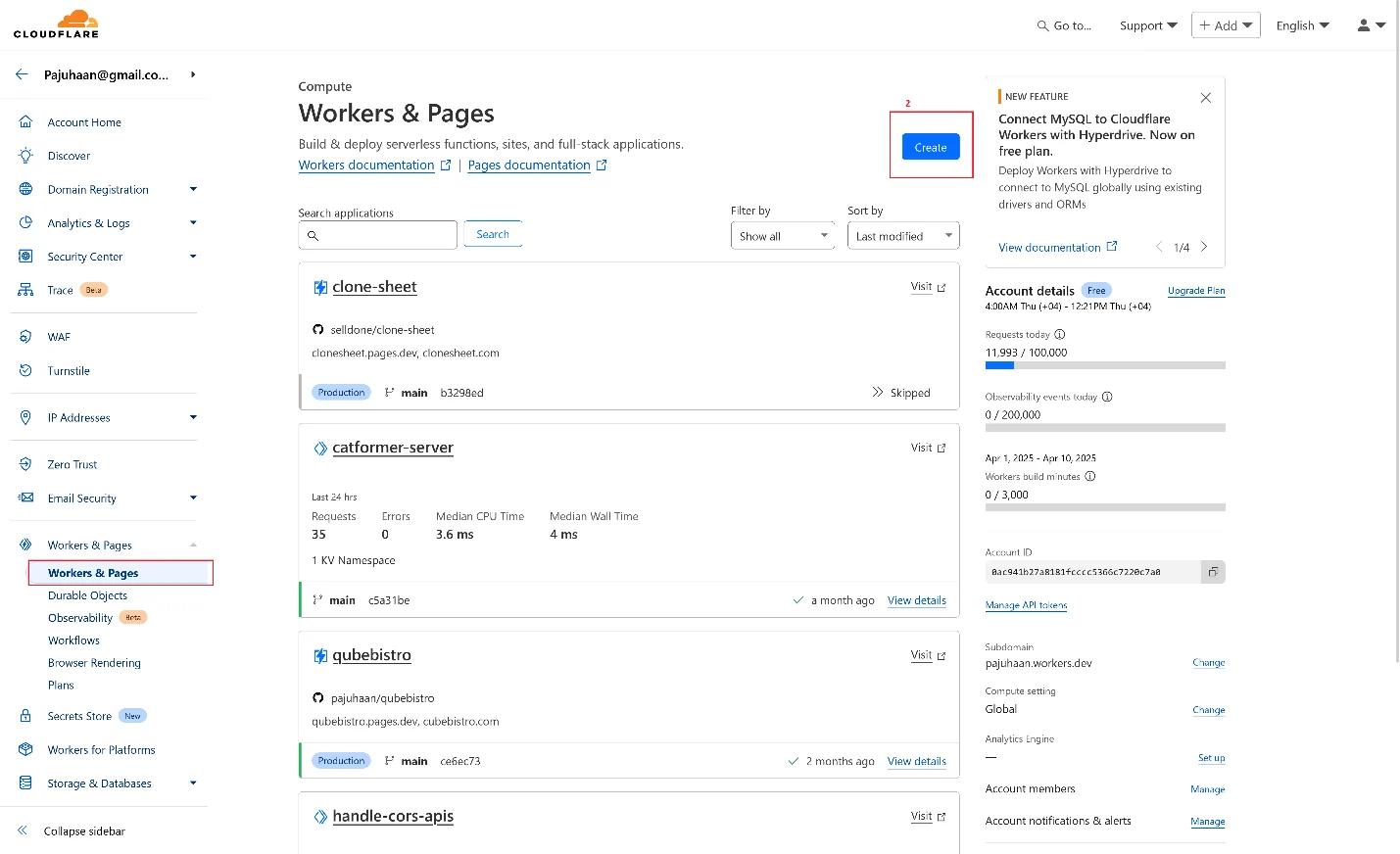
Framework-neutral Jamstack platform with a solid free tier, split testing, form handling and edge functions. Good if you want Vercel-style DX without Next.js preference.
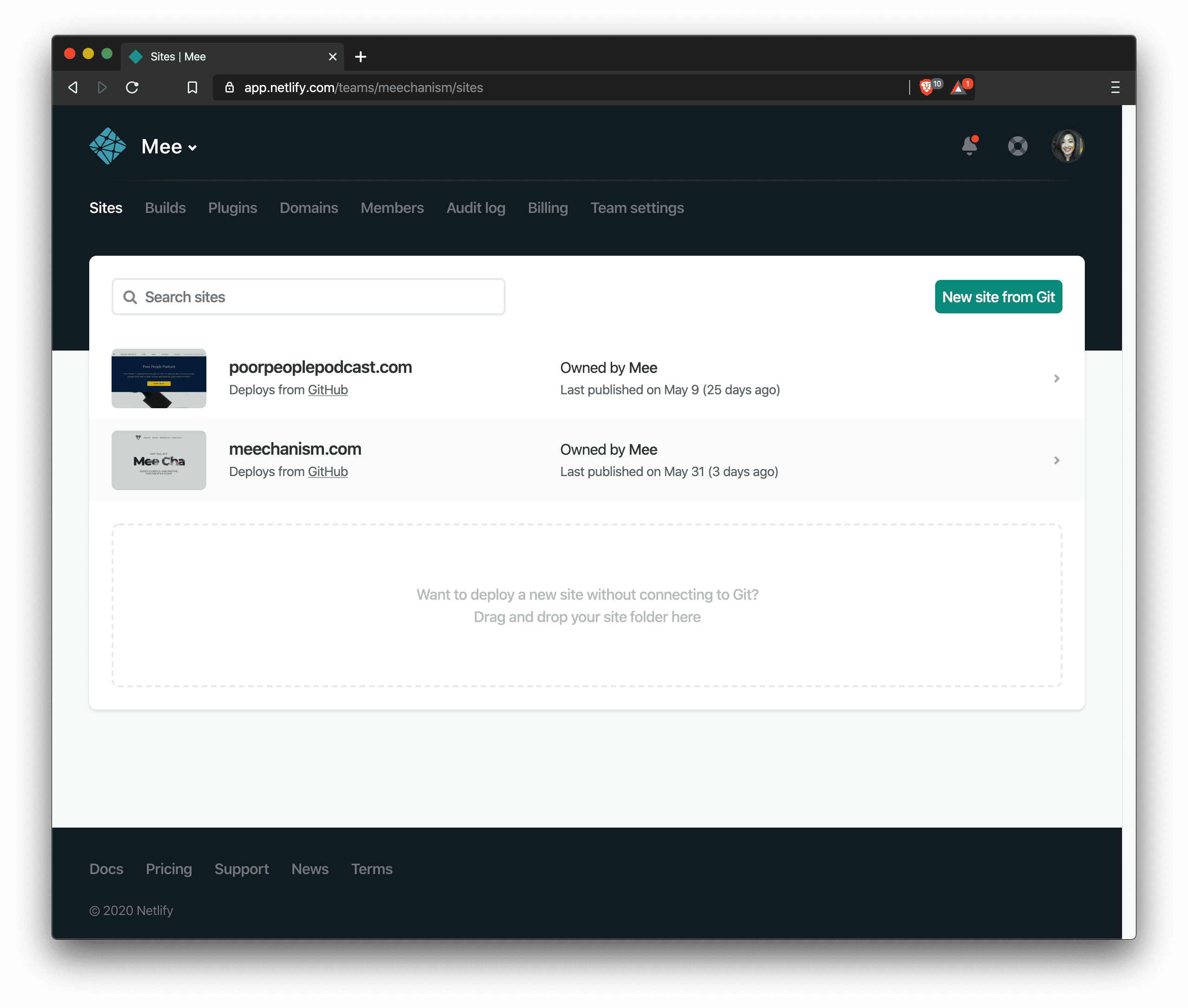
One managed platform for static sites, web services, databases and cron jobs. The natural step up when your project grows a real backend.
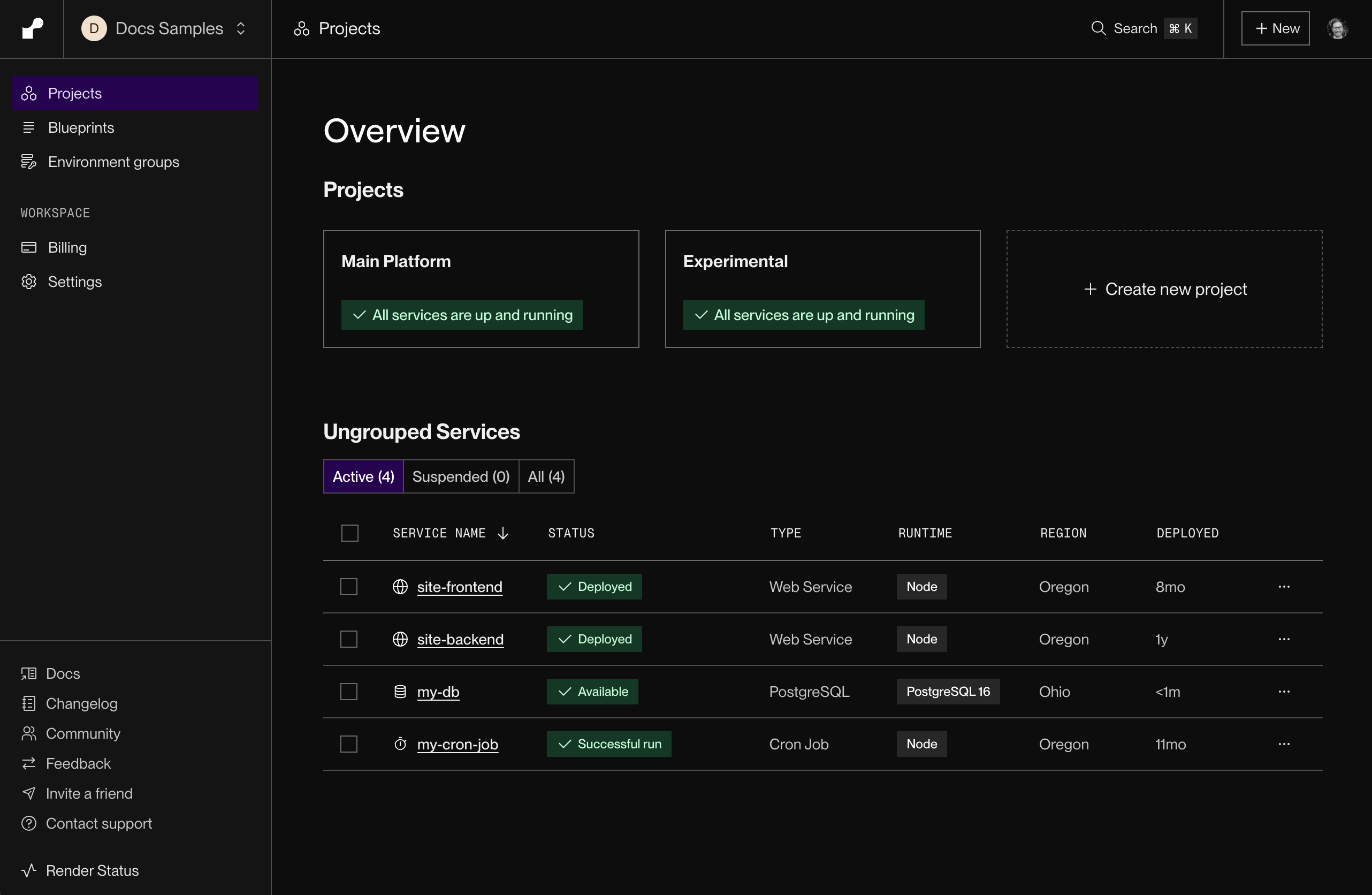
Usage-based billing with a $5/month credit, clear per-resource pricing, and zero per-seat charges. Popular with teams that want predictable costs at small-to-medium scale.
Frontend + full-stack hosting with native AWS integration and free-tier allowances. Fits when your team is already deep in AWS and wants a managed front-end layer.
Runs apps in lightweight VMs close to users on a global network. Strong for latency-sensitive full-stack workloads; small shared VMs start around $2–3/month.
Side by side
Vercel alternatives compared
How the shortlist stacks up on the factors that drive the switch — CI/CD depth, pricing model, and whether you can deploy to your own infrastructure. Buddy is highlighted as our top recommendation.
| Platform | Type | Pricing model | Free tier | Visual CI/CD | Deploy to own servers | Best for |
|---|---|---|---|---|---|---|
| Buddy | CI/CD + hosting infra | Flat plans | ✓ Real free tier | ✓ | ✓ SSH / FTP / K8s / agents | Build & deploy anywhere |
| Vercel | Frontend / Next.js | Per-seat ($20/user) | Hobby — personal only | ✗ | ✗ | Next.js apps |
| Cloudflare Pages | Static + Workers | Free · unlimited bw | ✓ Generous | ✗ | ✗ | Bandwidth & edge |
| Netlify | Static / Jamstack | Metered + credits | Limited | ✗ | ✗ | Framework-neutral Jamstack |
| Render | Full-stack managed | Usage-based | ✓ Static sites | ✗ | ✗ | Apps + databases + cron |
| Railway | PaaS | Usage + $5 credit | ✓ Credit included | ✗ | ✗ | Transparent team pricing |
| AWS Amplify | Frontend + full-stack | Pay-as-you-go | ✓ Allowances | ✗ | Via AWS | AWS ecosystem |
| Fly.io | Containers / VMs | Usage-based | Trial credit | ✗ | ✗ | Latency-sensitive apps |
Pricing models, plan limits and feature availability change often — check each vendor for current terms before deciding. Compiled June 2026 from each vendor's official pricing and documentation pages.
Official pages: Vercel · Buddy · Cloudflare Pages · Netlify · Render · Railway · AWS Amplify · Fly.io
Why we rank it first
What makes Buddy the strongest all-round pick
Most Vercel pain comes from one thing: build, CDN and hosting are locked inside Vercel's platform — there's no way out without re-architecting your deploy. Buddy splits them apart and gives you a complete hosting infrastructure you actually own.
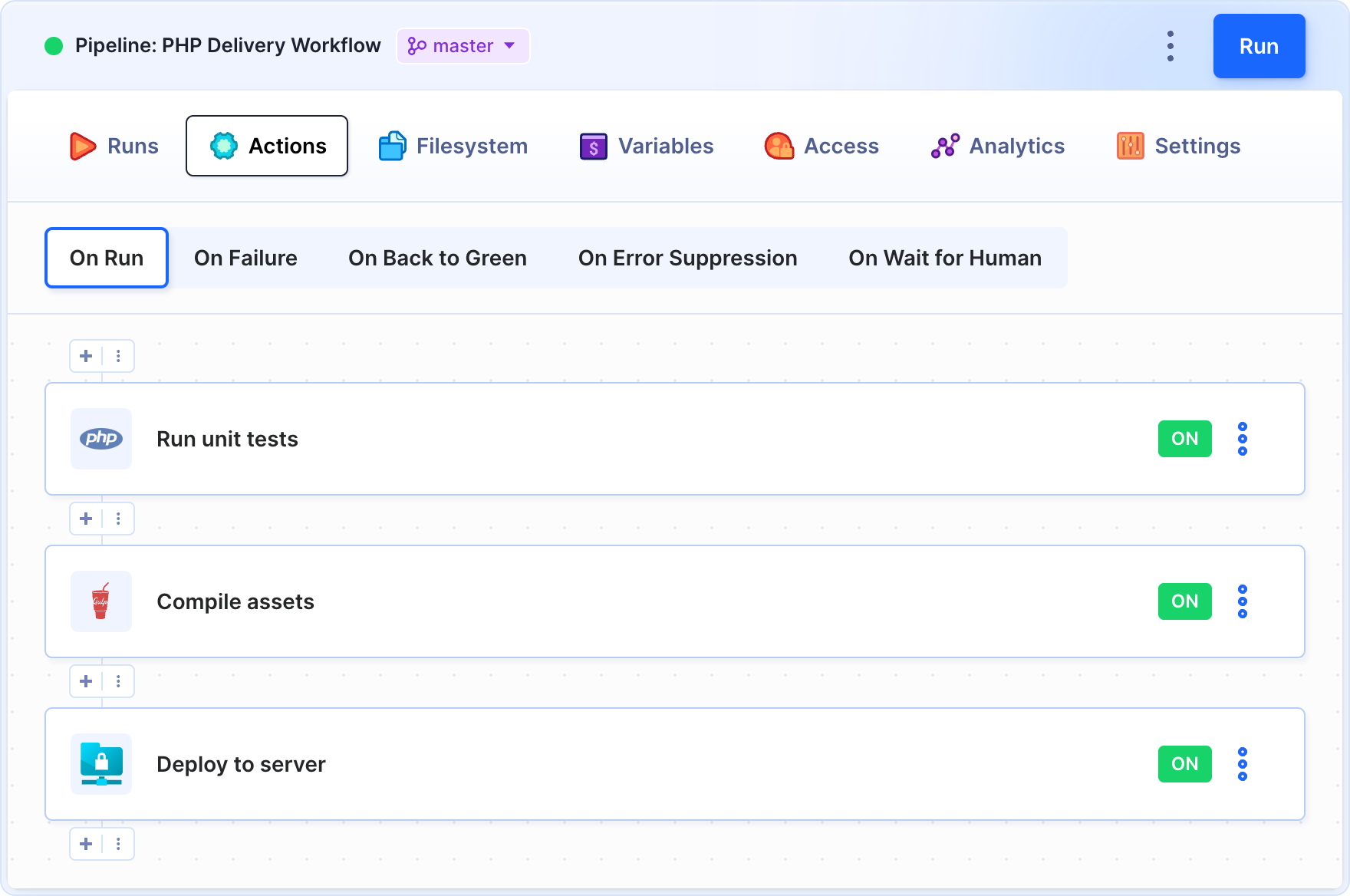
Visual pipeline editor
Build and deploy by clicking actions into place — no YAML required. The pipeline is generated for you, stays in sync with your repo, and handles parallel steps, conditionals, and environment promotions.
Docker layer caching
Layers are cached between runs at the platform level. A multi-minute build drops to seconds once the cache is warm — with no configuration required.
Deploy anywhere
Ship to Cloudflare, S3, FTP/SFTP, your own server, or Buddy's own hosting. One pipeline, multiple targets — you're never locked to one vendor's billing meter.
200+ curated actions
AWS, Cloudflare, Kubernetes, Slack and more — first-party and tested. Compose complex pipelines in minutes rather than scripting every integration by hand.
Flat plans, no per-seat tax
Pay by plan, not by head count. Your whole engineering team uses the same workspace for one predictable monthly price — no $20/user surprises as you hire.
Keep your repo
Connects to GitHub, GitLab and Bitbucket. Your code stays where it is; only the build and deploy pipeline moves to Buddy.
Built-in hosting infrastructure
The hosting stack Vercel doesn't give you
Buddy isn't just a CI/CD runner — it ships a complete deployment infrastructure. Every piece below is available out of the box, managed from the same dashboard as your pipelines.
Versioned, immutable releases
Publish your built site as a named, versioned artifact with a single command. Each version is an immutable snapshot — roll back to any previous release instantly. Access control is set at publish time: public for CDN-served assets or locked behind Buddy auth for internal staging previews.
- Rollback in one CLI command (
bdy artifact publish id:1.0.0 ./dist) - Public or locked access control per version
- Workspace-scoped — reuse across multiple projects and pipelines
Domain → artifact in one step
A distribution maps any domain or subdomain to any artifact version (or sandbox endpoint). Switch which version is live with a single route update — no DNS change, no CDN purge. Multiple routes per distribution let you serve different paths from different artifacts simultaneously.
- Instant switchover — swap artifact versions without touching DNS
- Route bare domains, subdomains or wildcard paths
- Same distribution can route to artifact or running sandbox endpoint
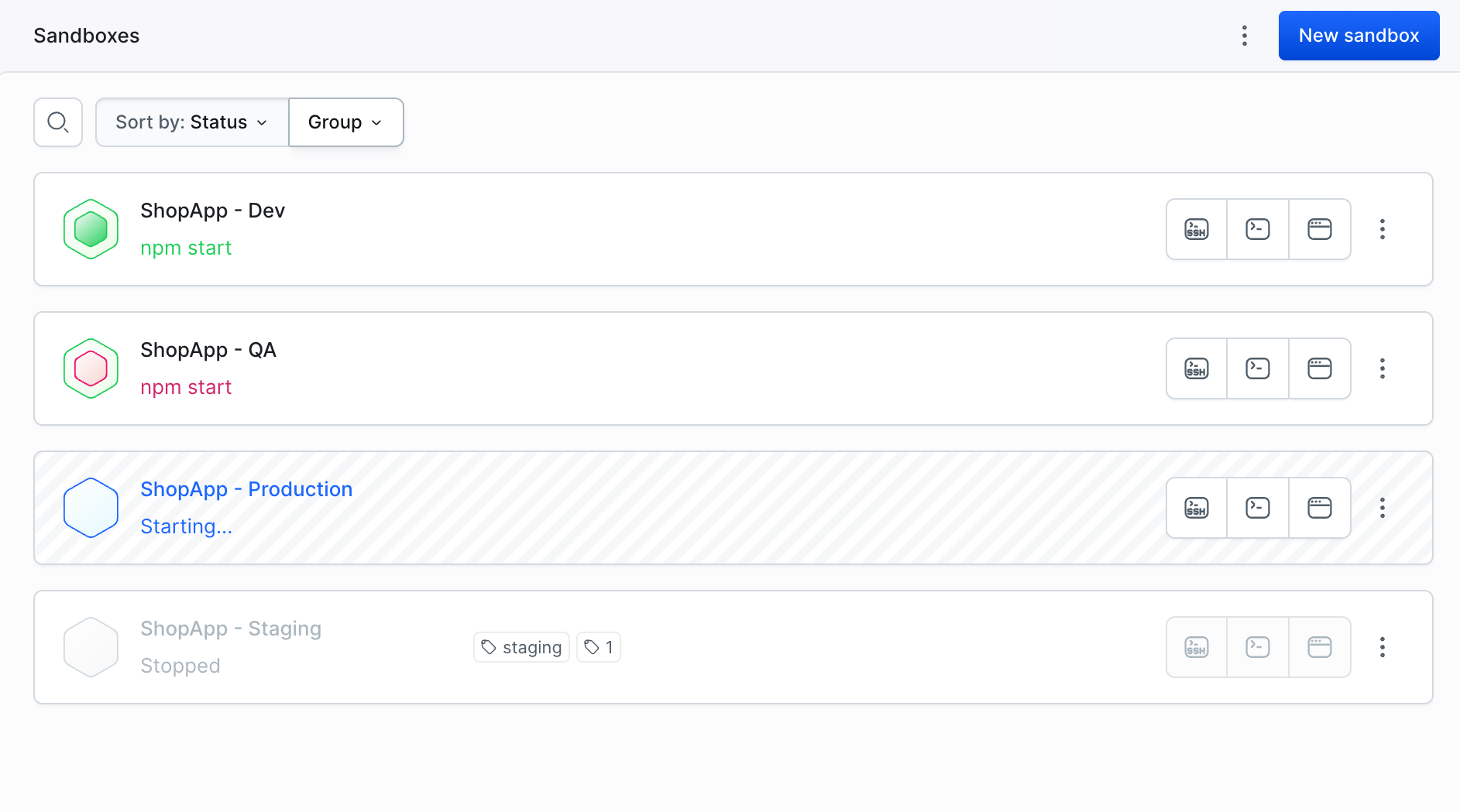
Full Ubuntu environments for full-stack apps
Sandboxes are isolated Ubuntu-based virtual environments that run inside Buddy. Each sandbox runs real applications with HTTP, TCP or TLS endpoints; includes a built-in log viewer and snapshot support; and comes preloaded with Docker, Node, Python, and the bdy CLI. Use them for staging environments, demo instances, or any workload that needs a running process — not just static files.
- Configurable CPU and RAM; Ubuntu-based with Docker 29, Node 24, Python 3.12
- HTTP / TCP / TLS endpoints, each mappable to a domain route
- Snapshots: save state, restore, or spin up new sandboxes from a snapshot
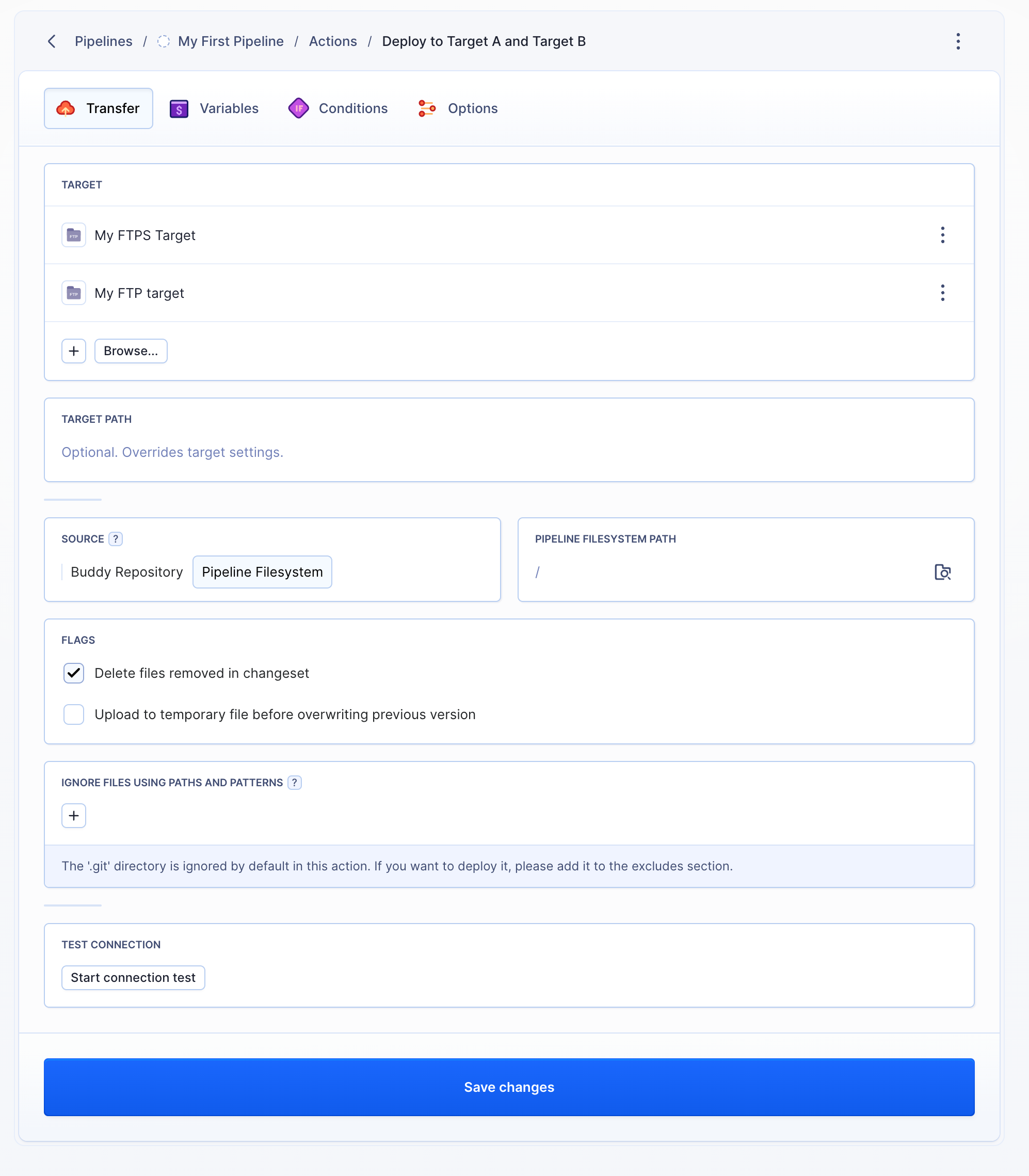
Deploy to any server, cloud, or cluster
A Target is a reusable connection definition — credentials, hostname, access scope — stored once and referenced by any pipeline action. Define it once; use it across every project that deploys to the same server. Pipeline actions can hit multiple targets in parallel (limited by plan runners), so a single action can push to all your production servers at once.
- File transfer: FTP, FTPS, SFTP/SSH
- Cloud VMs: DigitalOcean, UpCloud, Vultr, AWS EC2
- Databases: PostgreSQL, MySQL, MongoDB, MSSQL
- Clusters: Kubernetes, GKE, EKS, AKS, DOKS
- Git: push built code to any remote repository
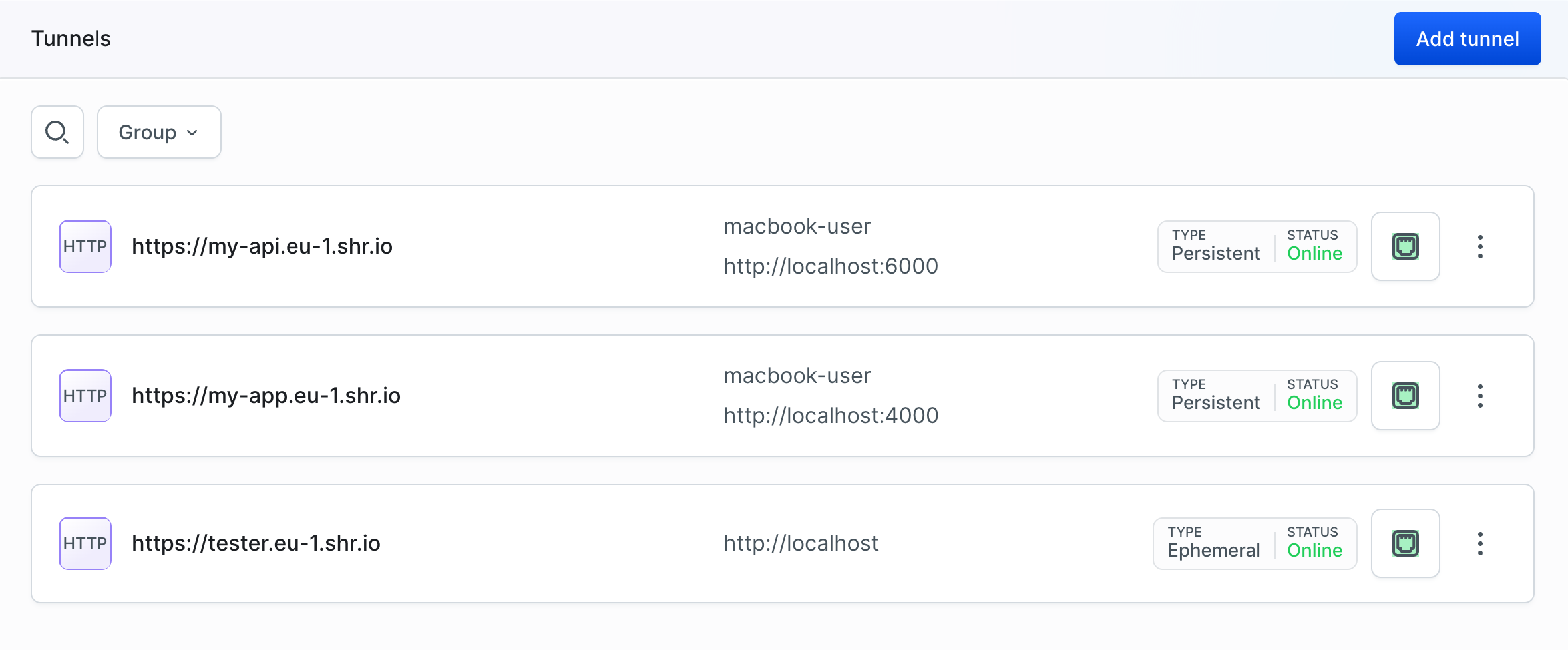
Expose private services without opening ports
A Tunnel maps an external FQDN to an internal IP and port through an encrypted outbound connection — no firewall changes, no VPN. Ephemeral tunnels spin up on demand and close with the session; persistent tunnels keep a stable URL running continuously. Use them to share a staging environment with a client, expose a local dev server for OAuth callbacks, or give QA access to a private service before it ships.
- End-to-end encryption, IP masking, port forwarding
- Optional HTTP Basic Auth and IP/User-Agent allowlists
- Persistent tunnels: stable URL, survives restarts, configurable via YAML
- Works from the
bdyCLI:bdy tunnel HTTP --token <TOKEN> localhost:4000
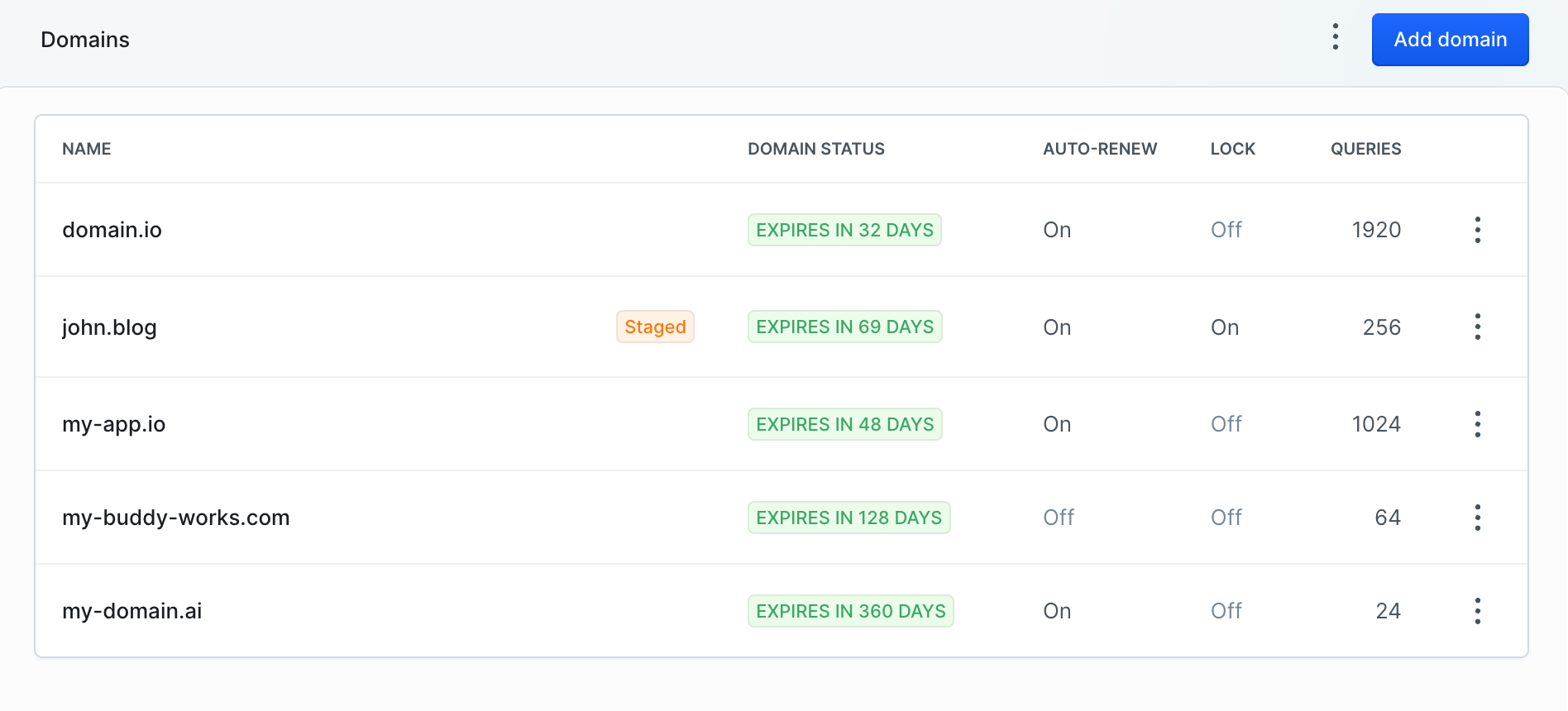
Buy, manage, and route — all in one place
Register free domains directly in Buddy, or transfer an existing domain to manage its DNS records from the same dashboard as your pipelines and hosting. Add A, CNAME, MX, TXT, and DMARC records; enable DNSSEC; set up auto-renewal. No separate registrar login, no copy-pasting nameservers — one dashboard from repo push to live domain.
- Buy free domains with
bdy domain buy(no registrar account needed) - Full DNS record management — A, CNAME, MX, TXT, DMARC, DNSSEC
- Auto-renew; domain transfer in and out; DNS query analytics
Self-hosted CI/CD runners on any machine
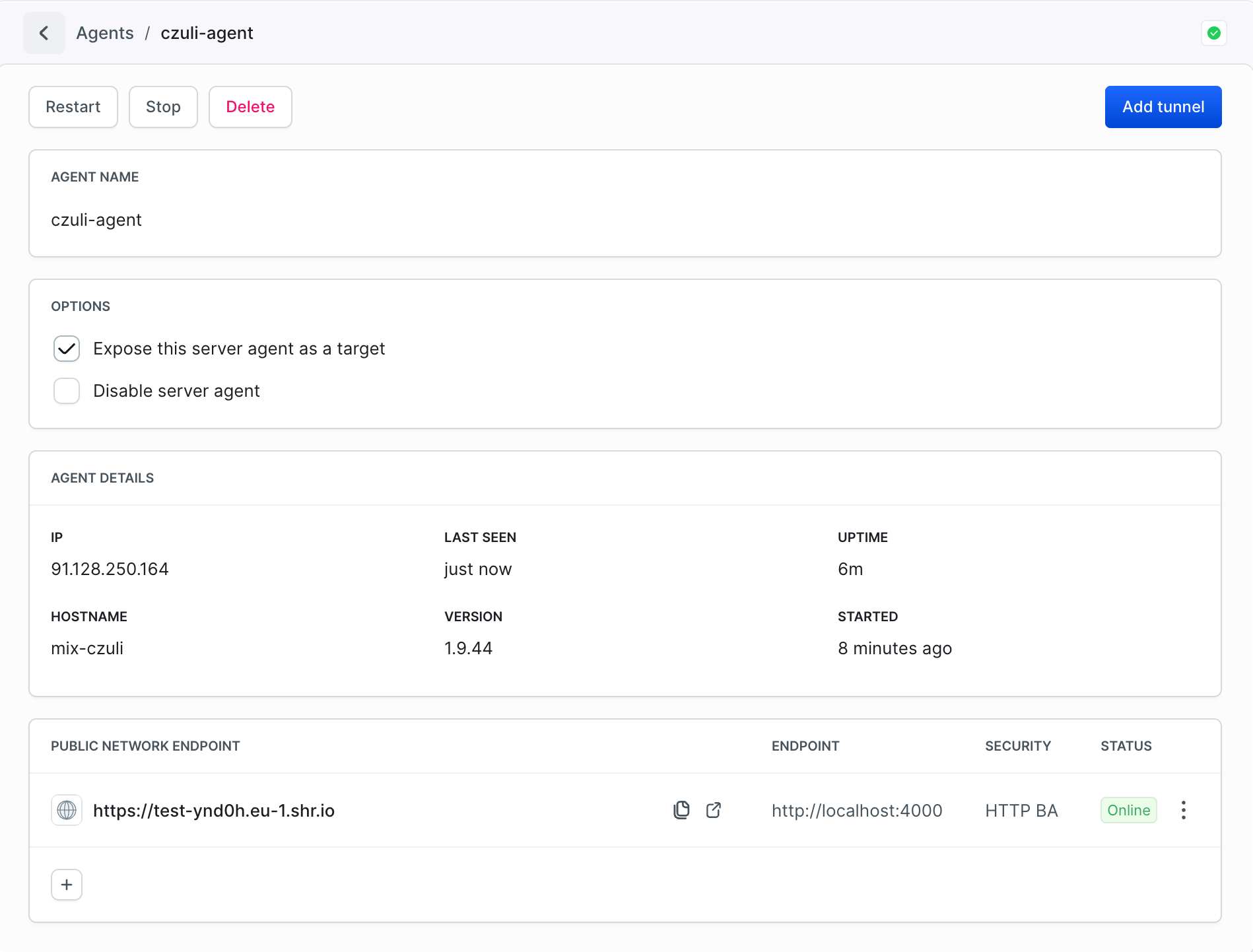
A Server Agent is a lightweight bdy daemon installed on any Linux, macOS, or Windows machine. It maintains a constant encrypted outbound connection to Buddy — no open firewall ports. Register it once; it appears in your workspace as both a CI/CD runner and, optionally, an SSH deployment target. Use it for private on-premise builds, air-gapped environments, or offloading heavy builds to a dedicated machine.
- Platforms: Linux x64/ARM64, macOS ARM64, Windows x64
- Install via APT, Homebrew, Chocolatey, curl, or NPM
- Expose as SSH target: tagged, filterable, reusable across pipelines
- Assign tags for environment routing (e.g.
production,staging)
A fair call
When Vercel is still the right choice
Switching isn't always worth it. Here's an honest read on when to stay and when to move.
Vercel is fine if…
- Your entire stack is Next.js and you want the tightest possible integration with the framework's latest features.
- Your team is small (1–2 people) and the $20/seat Pro cost is manageable.
- You value zero-config previews per pull request and don't need to customize the build environment.
- You deploy to Vercel's CDN only — no self-hosted, on-premise or multi-cloud targets needed.
Consider an alternative if…
- Per-seat billing is climbing — Buddy's flat plans cover your whole team for one price.
- You need to deploy to your own servers, private clusters, or on-premise machines — Buddy targets and Server Agents cover that directly.
- You want to expose staging environments to clients without open firewall ports — Buddy Tunnels do this in one command.
- You build non-Next.js or polyglot stacks and want a first-class pipeline, not Vercel's black-box build step.
- You need Vercel-equivalent hosting for static assets but with versioned rollbacks and distribution-level routing — Buddy Artifacts and Distributions cover that.
Common questions
Vercel alternatives — common questions
Is Vercel free?
Vercel has a Hobby tier (free) for personal, non-commercial projects. The Pro plan is $20 per team member per month. The Hobby tier prohibits commercial use and removes team collaboration. Bandwidth is included up to limits on each plan, with overage billed at around $0.15/GB. Analytics, deployment protection (password-protected previews), and audit logs are paid add-ons or Enterprise-only features.
What is the best alternative to Vercel?
It depends on what you need. For a complete build-and-deploy pipeline with real hosting infrastructure — targets, secure tunnels, domain management, versioned artifacts and server agents — Buddy is the strongest all-round choice. For unlimited bandwidth and global edge serving, Cloudflare Pages leads. For Jamstack without Next.js preference, Netlify works well. For full-stack apps with databases and cron jobs, Render or Railway fit better.
Why are developers leaving Vercel?
The most common reasons are: per-seat Pro pricing ($20/user/month) that scales steeply as teams grow; Next.js framework lock-in because Vercel owns Next.js and optimizes its runtime features exclusively for its platform; metered bandwidth and function execution that surprises on high-traffic sites; enterprise-gating of basic features like password-protected previews and audit logs; and the inability to deploy to your own servers or private infrastructure from the CI pipeline.
Can Buddy deploy to my own servers, not just cloud hosting?
Yes — this is one of Buddy's core strengths. You define a deployment target (SSH/SFTP, FTP, DigitalOcean, AWS EC2, Kubernetes, or a Server Agent installed on any machine) once, and reference it from any pipeline. A single pipeline action can push to multiple production servers in parallel. Vercel has no equivalent for deploying to self-hosted, on-premise, or air-gapped infrastructure.
What is Vercel lock-in and how do I avoid it?
Vercel lock-in has two forms: (1) the git-push-to-deploy workflow bundles build, CDN and hosting into one closed system — there's no way to redirect just one piece; and (2) Vercel owns Next.js and ships runtime features (Partial Prerendering, Server Actions at the edge, Data Cache) that are optimized for or exclusive to Vercel's infrastructure. To avoid it, decouple your build from your host. A CI/CD tool like Buddy builds your site as a portable artifact and deploys it anywhere — Cloudflare, S3, your own server, or Buddy's own hosting — so you can swap the deploy target without changing your code.
Which Vercel alternative is best for non-Next.js projects?
Cloudflare Pages and Netlify both support any static-site generator equally well and offer better free tiers for non-Next.js projects. For full-stack non-Node apps (Go, Python, Rust, containers), Render or Fly.io are better fits because Vercel's serverless runtime is Node.js-optimized. Buddy is the most framework-neutral option because every pipeline runs inside Docker containers you define — any build toolchain, any language, any artifact format.
How hard is it to migrate off Vercel?
For a static site or simple Jamstack project, migration is usually a few hours. The built output (HTML/CSS/JS/assets) is fully portable — the work is in recreating environment variables, redirect rules, and any serverless functions. Next.js features that rely on Vercel-specific runtime capabilities (Partial Prerendering, Image Optimization API, ISR via Data Cache) require remapping to the target platform. Using a CI/CD platform like Buddy as the build layer means you can swap the deploy target without changing your application code.